Acoustic Guitar Fretwork Process
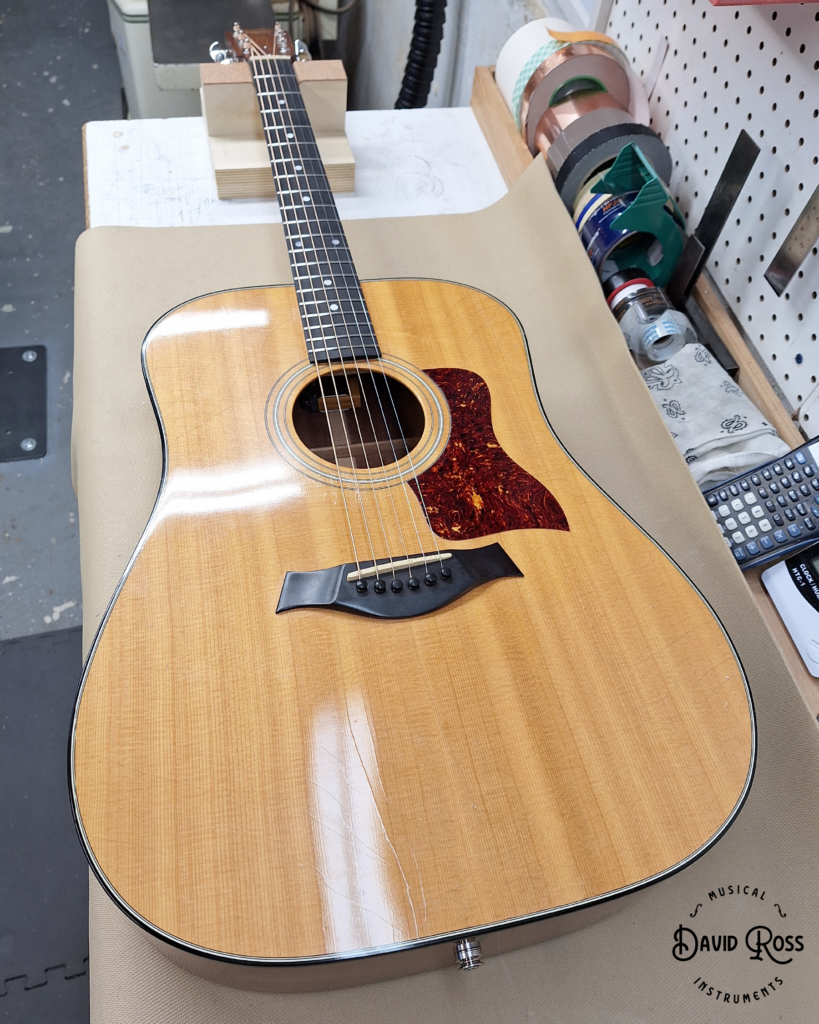
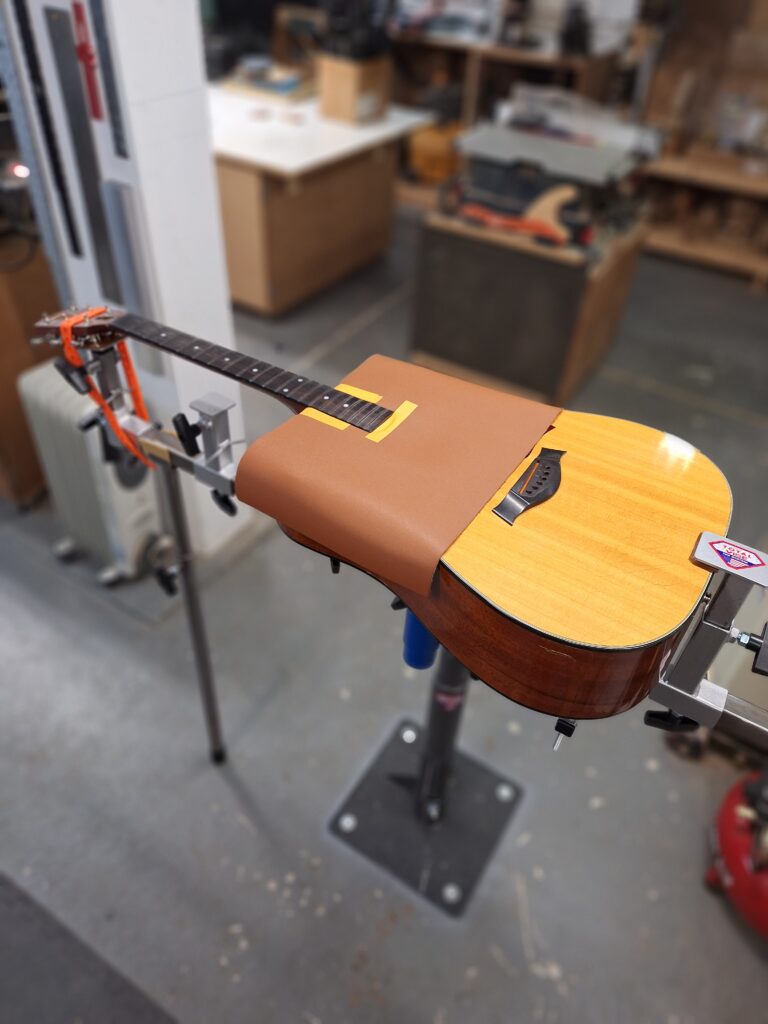
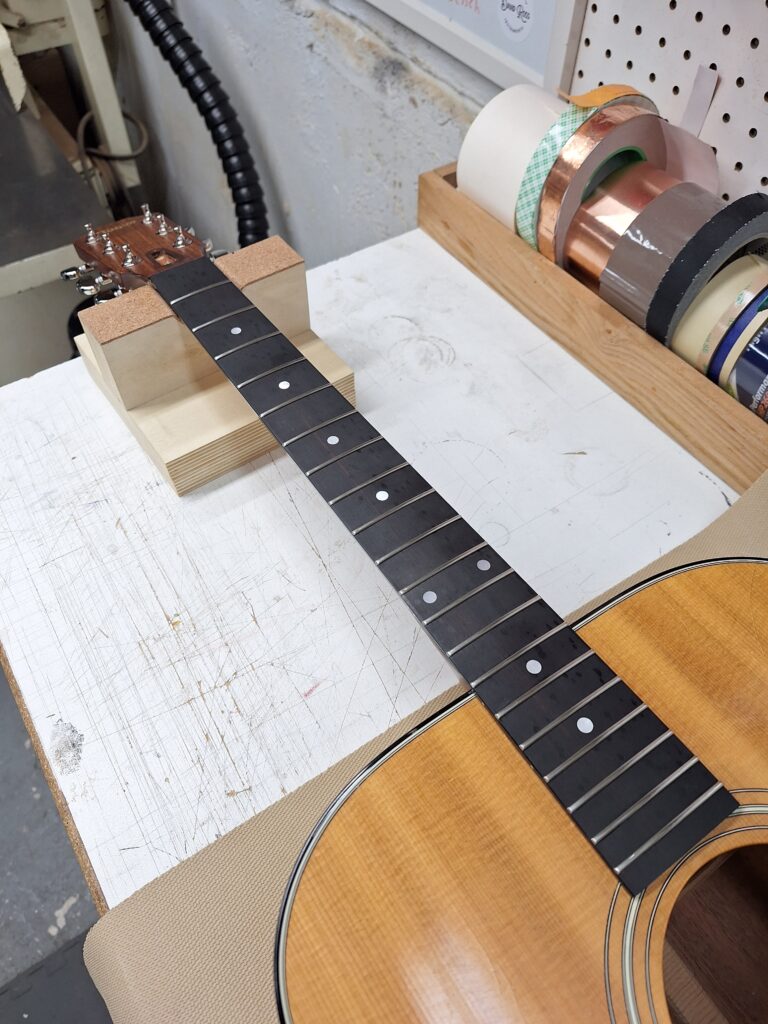
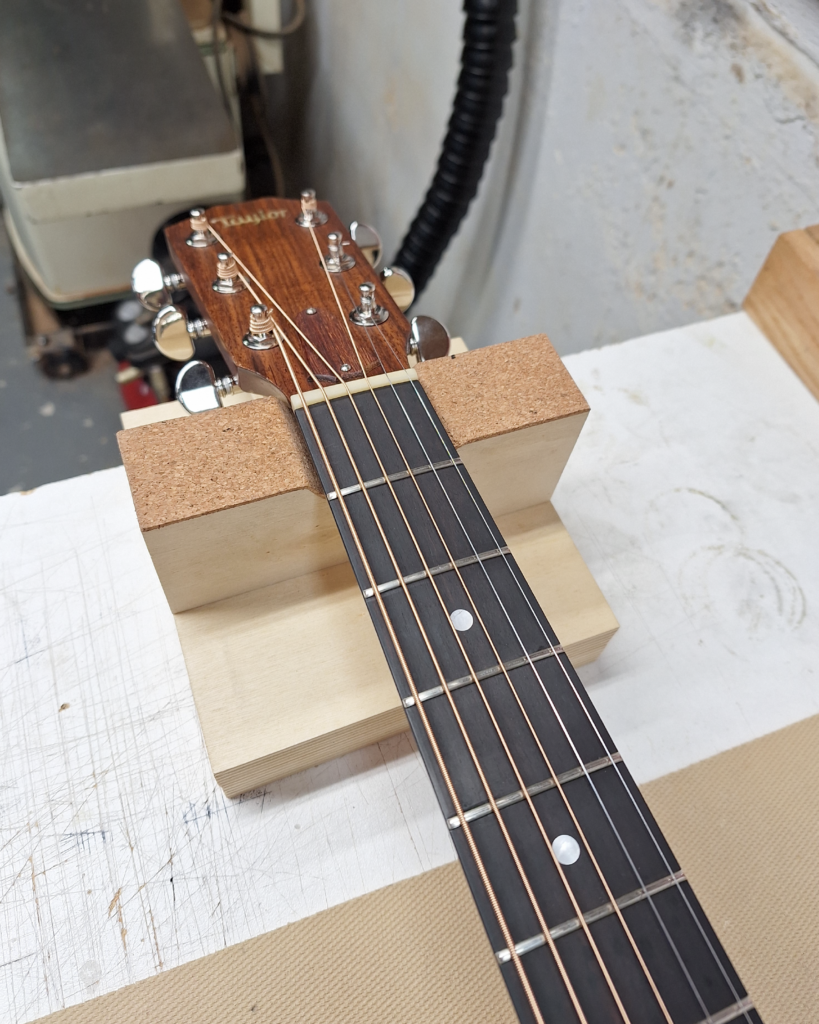

Introduction – I recently had a guitar come through my workshop here in Binghamton, NY, that gave me reason to create a new blog post. This Taylor 510 acoustic guitar from the early 1990s was in need of a refret, and I decided to document my process. I’ve been trying out some different techniques, different tools, and also acquired the Proper’s Guitar Workstation by Total Vise, which has really come in handy for doing fretwork. It’s worth noting that fretwork is an ever-evolving process, and in this post I’m going to be showing where my process currently stands.
Overview – One of the first steps in doing a refret is an overall assessment of the instrument. While the guitar is worn and has been played heavily for the past 35 years or so, it’s been kept in very nice shape. There are no loose braces, it’s not in need of a neck reset or any bridge work, and while there is some finish damage here and there, it should take a refret just fine. One thing to note is that the fingerboard is worn in the first several positions, but this proved to be not too much of a challenge when resurfacing the fingerboard.
From this point, I had the guitar on my bench and removed the nut (which I have a video on) and began removing the old frets. Since I was dealing with an ebony fretboard here, I wanted to be very careful when removing the frets, since ebony tends to be quite hard but also quite brittle, and tends to chip when pulling frets. I began by removing the last fret with my Hosco fret cutting end nips, and saw that these frets were glued in. I’ll typically remove one fret and see what I’m dealing with, and if there’s glue, I’ll turn on my soldering iron and add a little bit of heat to the frets. I find that this helps soften the glue and makes removing frets easier. I should also mention that I had a discussion with the owner of this guitar on what fret wire they would prefer, and planned as much as I possibly could before diving into the project. In fact, I have a sheet that I use whenever I’m doing a refret, where I write down pertinent questions about the customers preferred string gauge, fret size, fret material, string action, relief etc… This has proven valuable to me over time.
After the frets are all removed, I place the guitar in my Proper’s Guitar Workstation. This process is made easy since I can make quick adjustments to the device and get back to work. From here I straighten the neck, make adjustments to the guitar and take note of what I’m seeing.
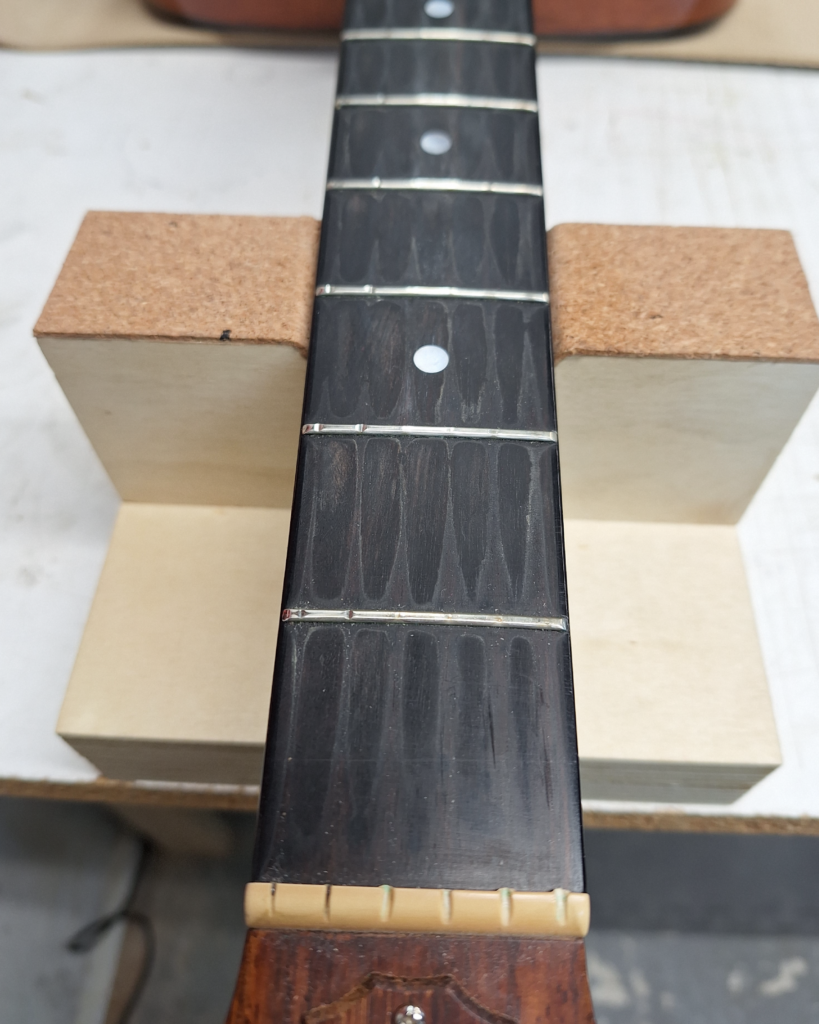
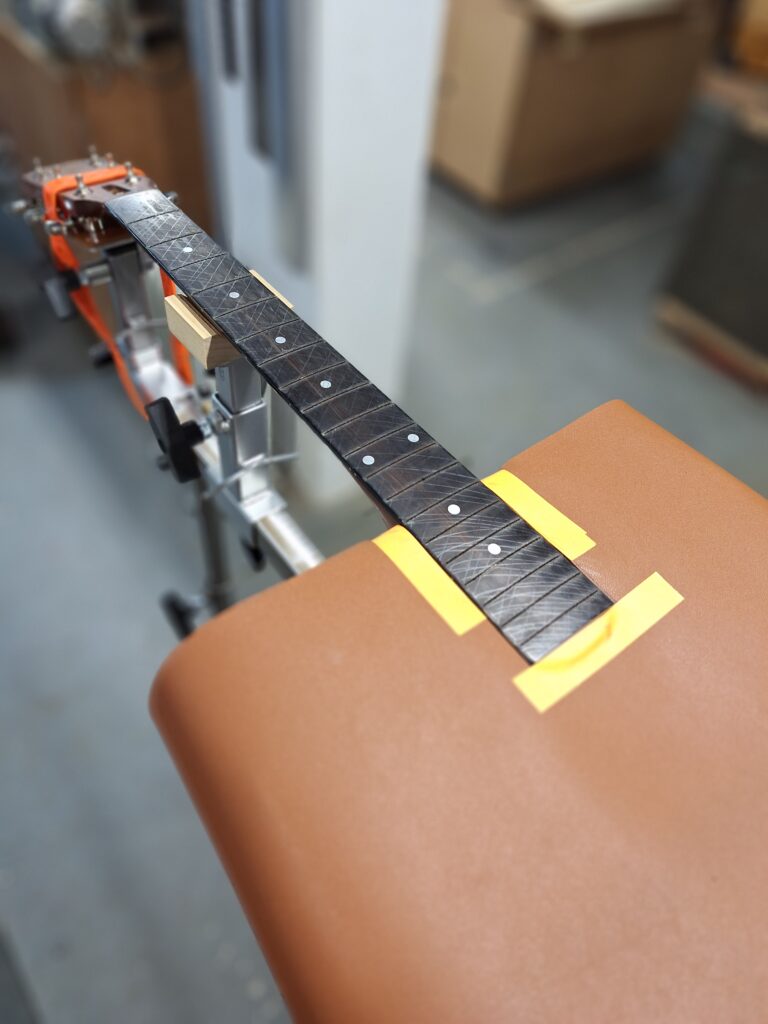
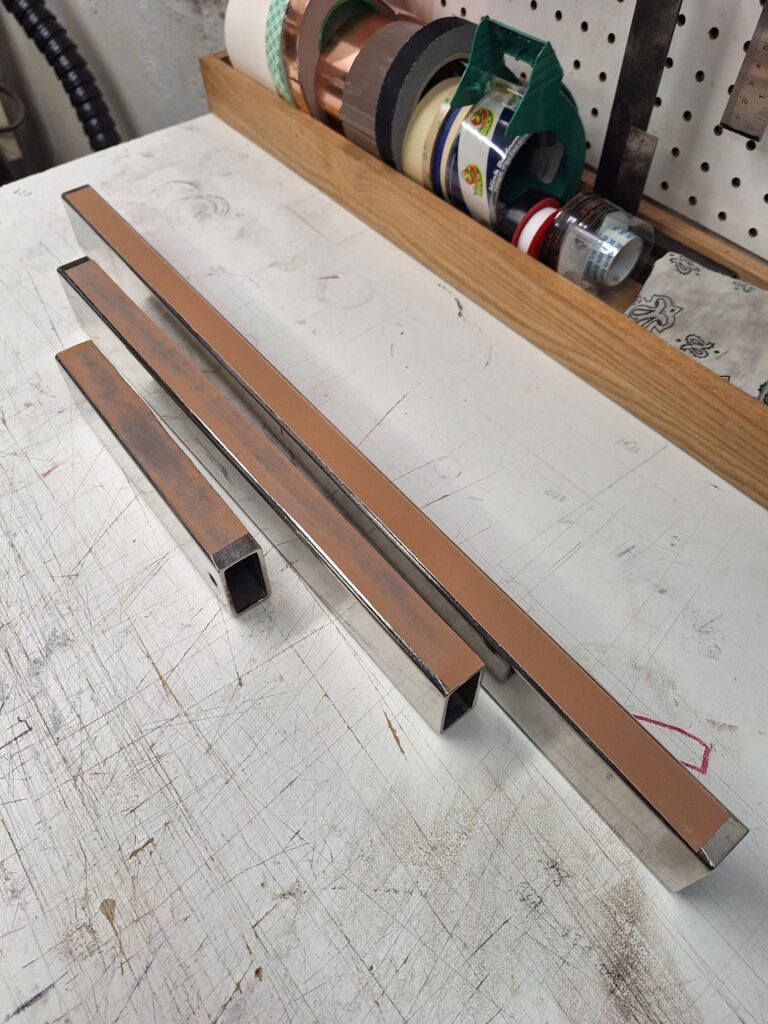
Once everything is as it should be, I mark the fingerboard with pencil and begin resurfacing with my three aluminum sanding beams from StewMac. I use self-adhesive sandpaper and I’ll typically start with 220 grit. This was not a particularly troublesome fingerboard, although it did have a rather significant fall-away past the body joint that needed to be accounted for.
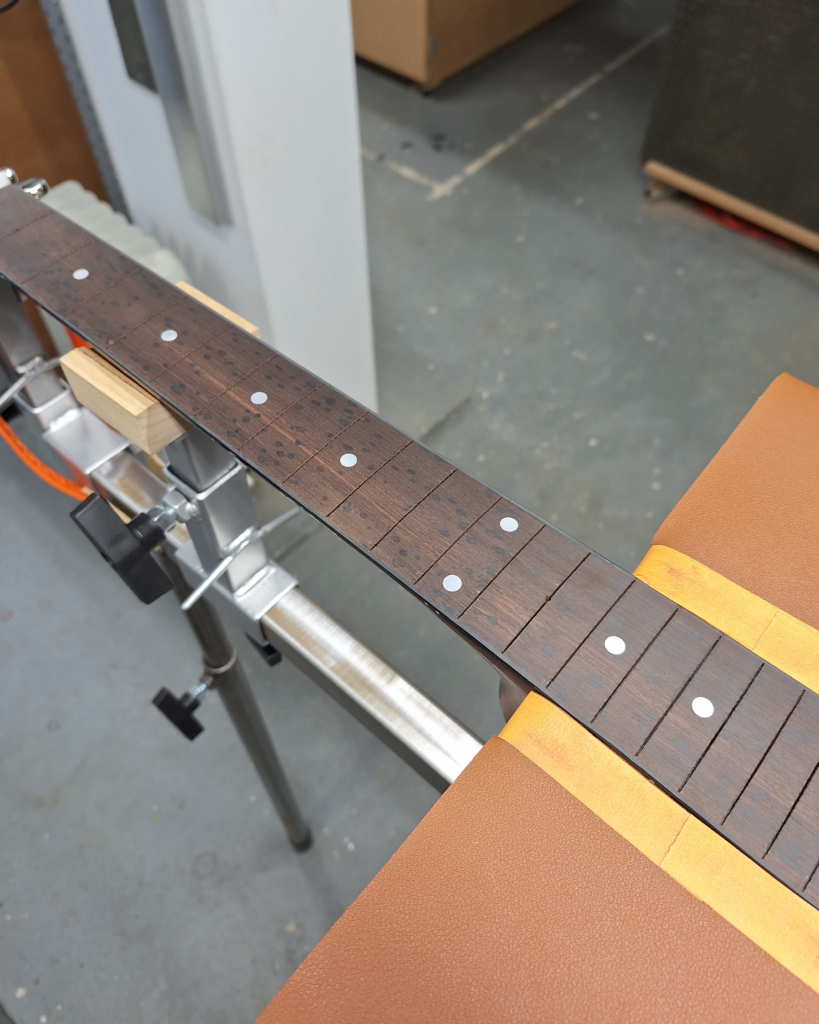
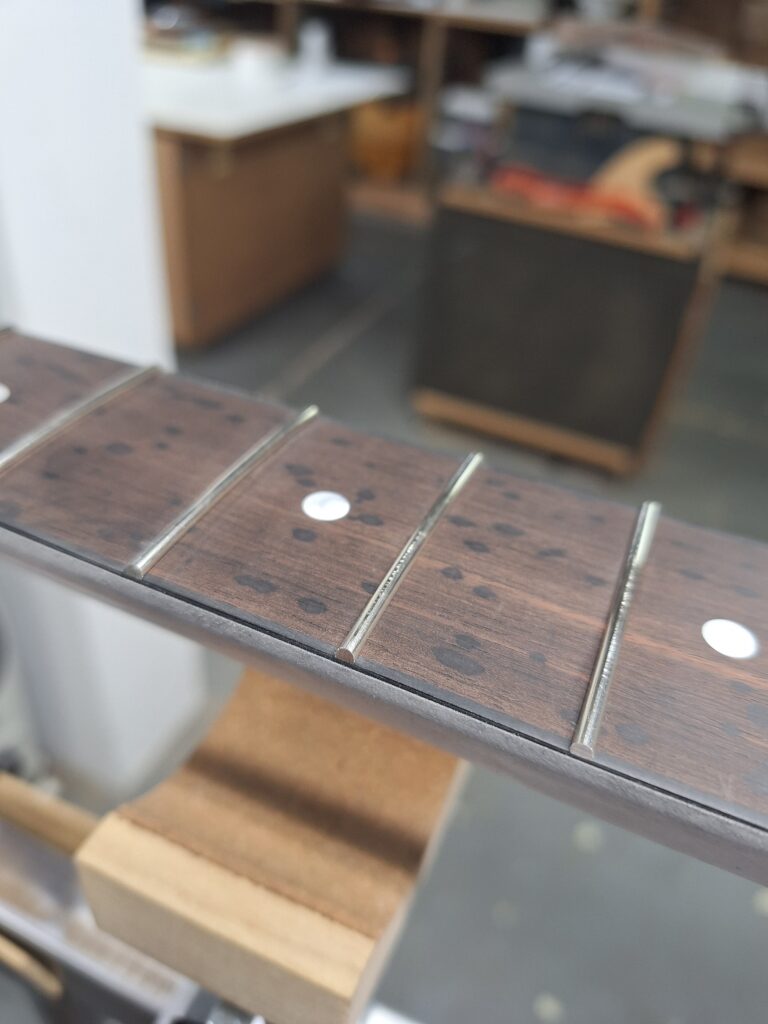
You can see in the picture below just how worn the fingerboard was and how much lighter in color the freshly sanded ebony is. You may also notice the spots in the ebony where the fingerboard has been resurfaced. This is a common occurrence for Ebony in my experience, and it will typically darken significantly by the time I oil the fingerboard and finish up with the guitar.
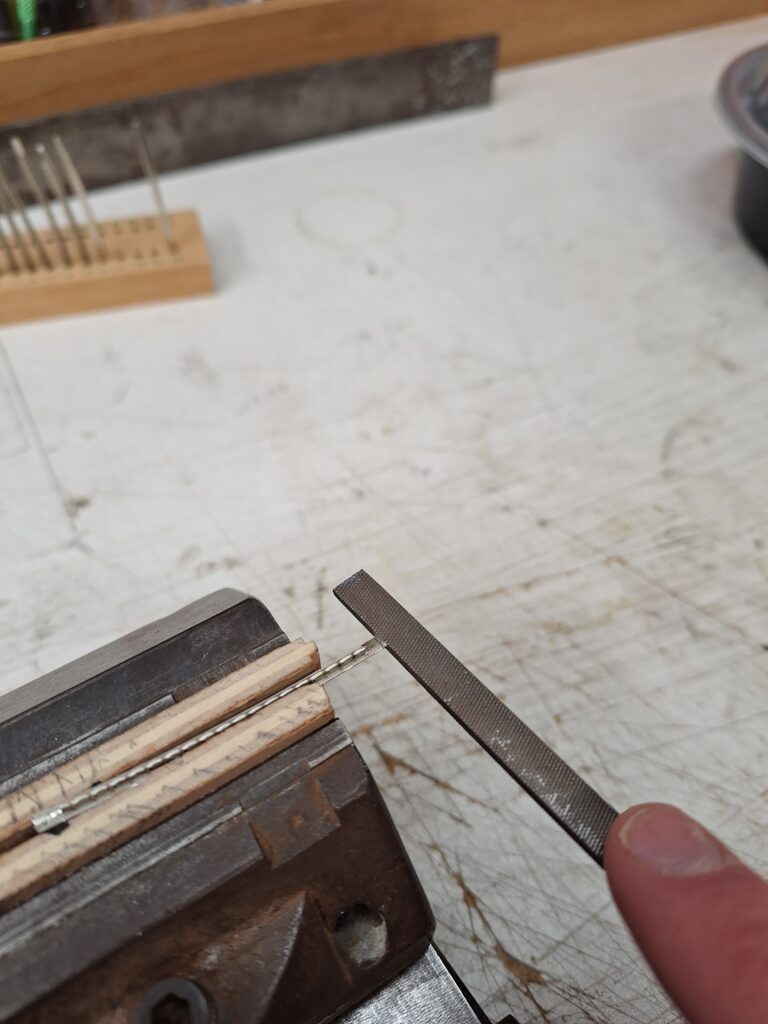
Once the fingerboard is fully prepared by sanding it to a high grit, and making sure all of the fret slots are cleaned up and any chips have been filled, it’s time for frets. I’ll radius the fretwire and trim each fret to its rough length. From here I’ll remove the tang with my StewMac fret tang nippers, and the finish them up with a hand file.
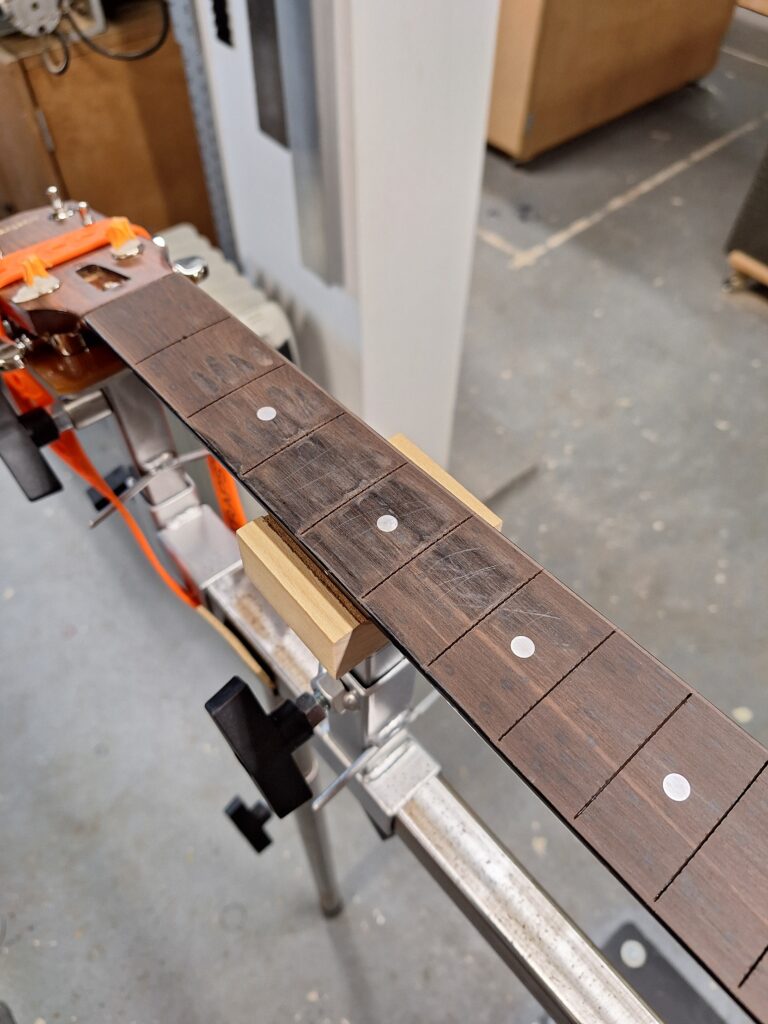
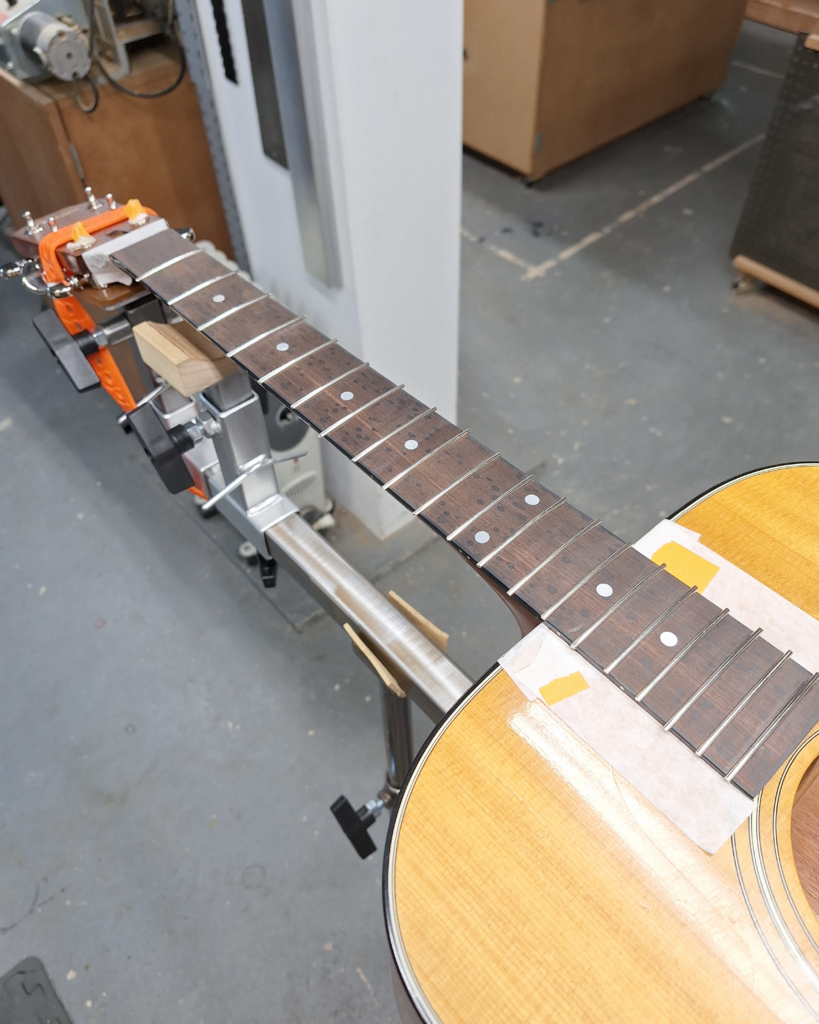
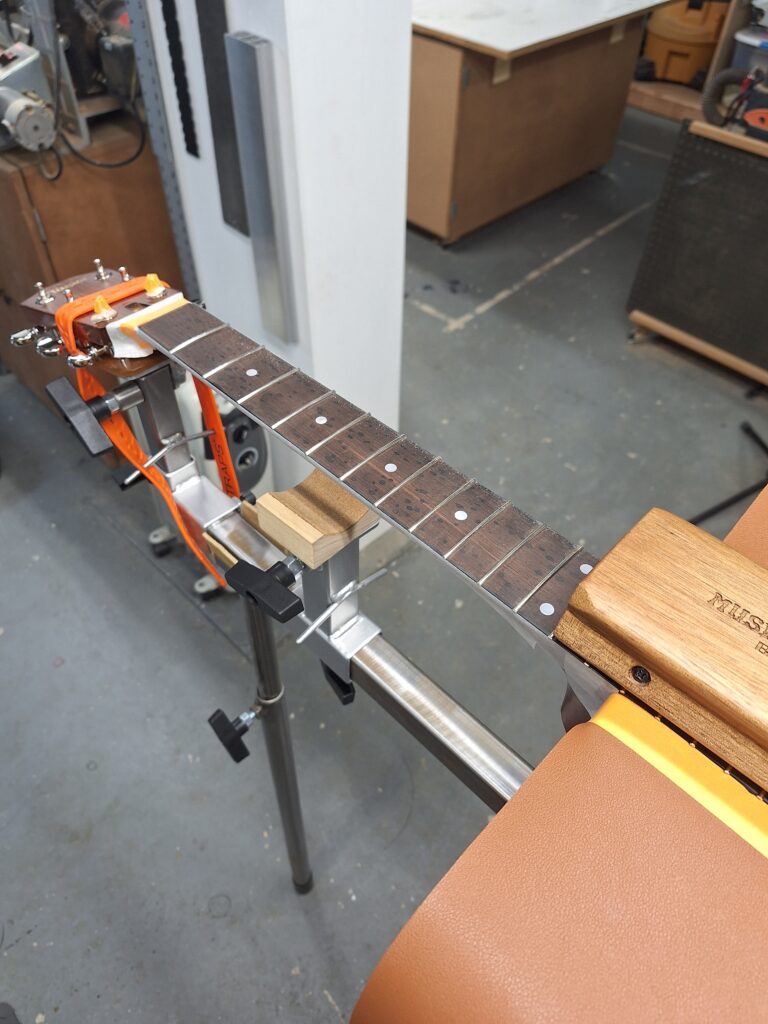
Once the frets are prepared I typically prefer to press them in, although on this particular guitar I did a combination of pressing and hammering. These frets did not go in the easiest despite the fret tang matching the width of the slots. I used a bit of yellow glue in the slots not only for any gap filling benefits, but also as a bit of a lubricant. I found that this helped. One thing to note is that I used the StewMac Prop-Jacks to support the fingerboard extension when putting frets in. Afterwards, I used my Music Nomad Fret Beveling File to clean up the fret ends.
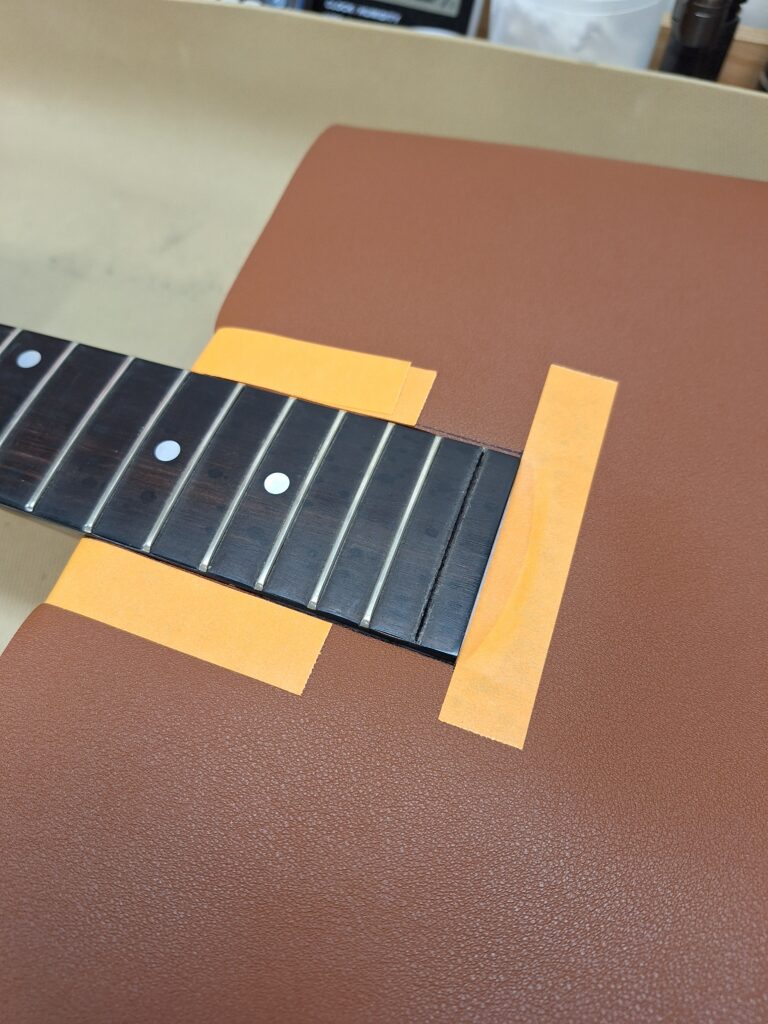
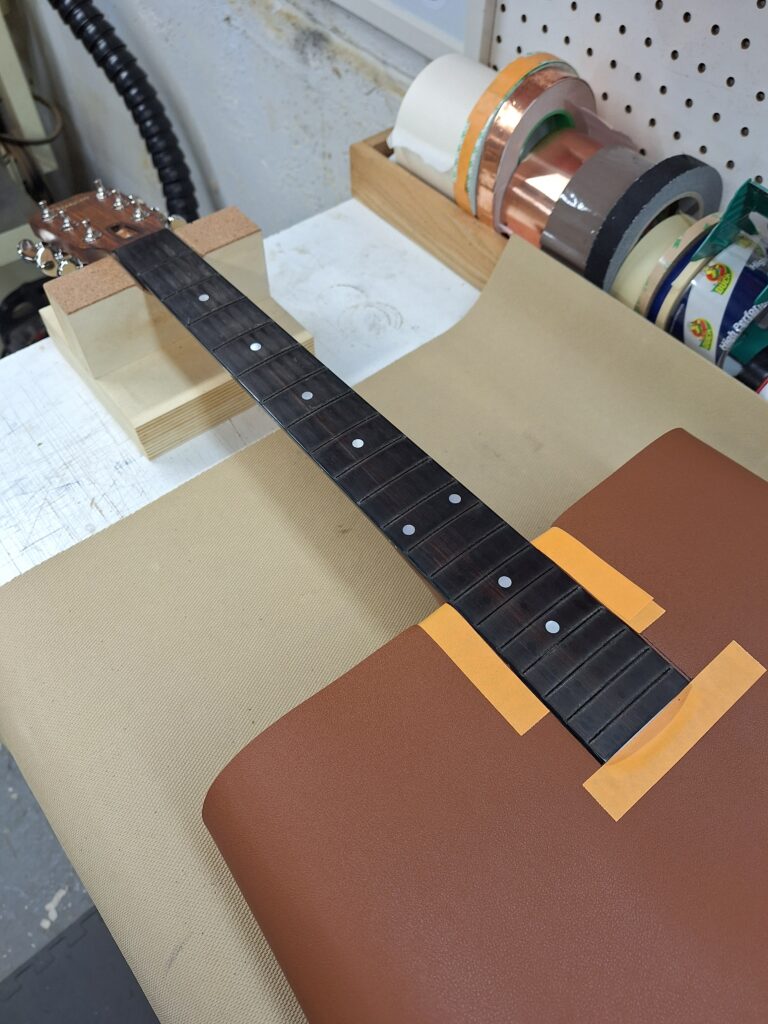
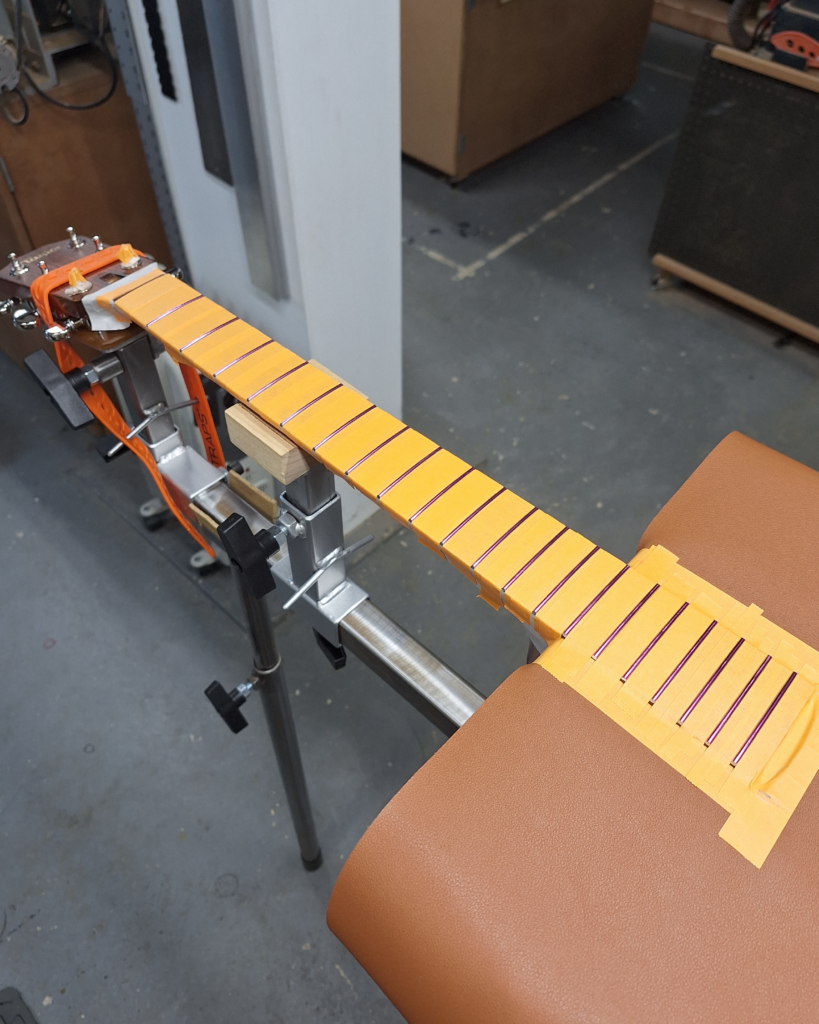
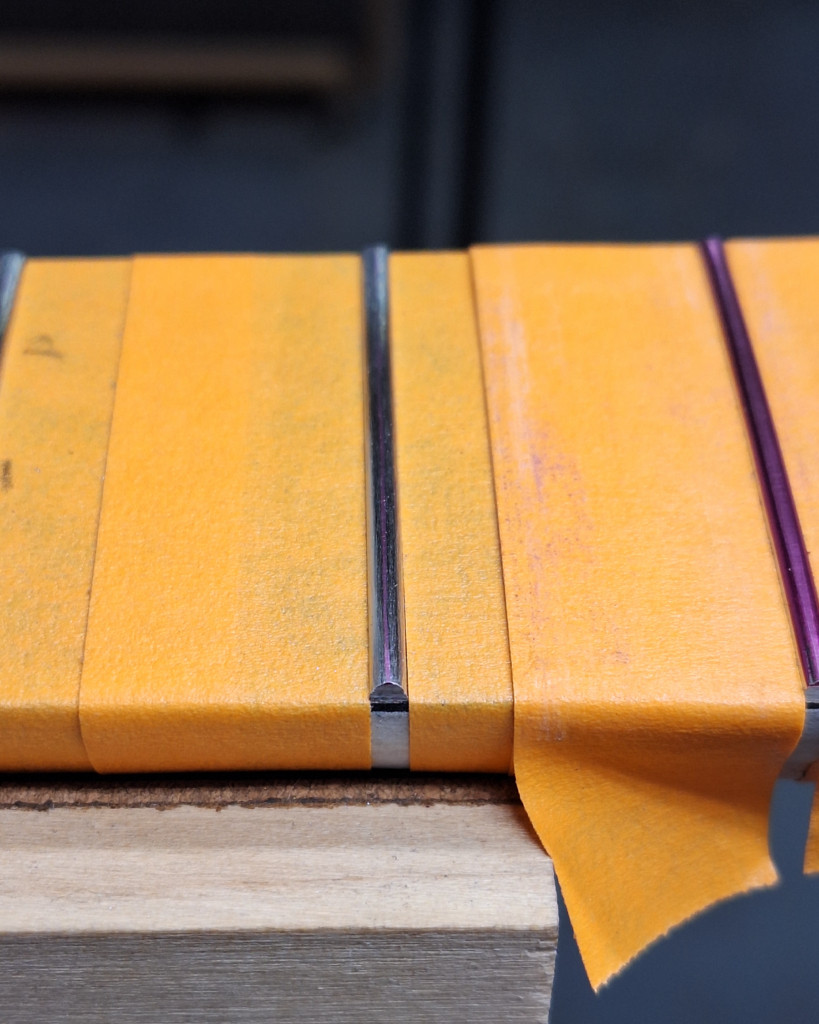
From here I masked off the fingerboard, colored the fret tops with a magenta Sharpie, and began the process of leveling the frets, once again using my StewMac sanding beams, this time starting with 400 grit. When the fingerboard is leveled and radiused properly, it makes leveling the frets that much easier. I really don’t have to spend a lot of time on this step before I get the frets how I want them.
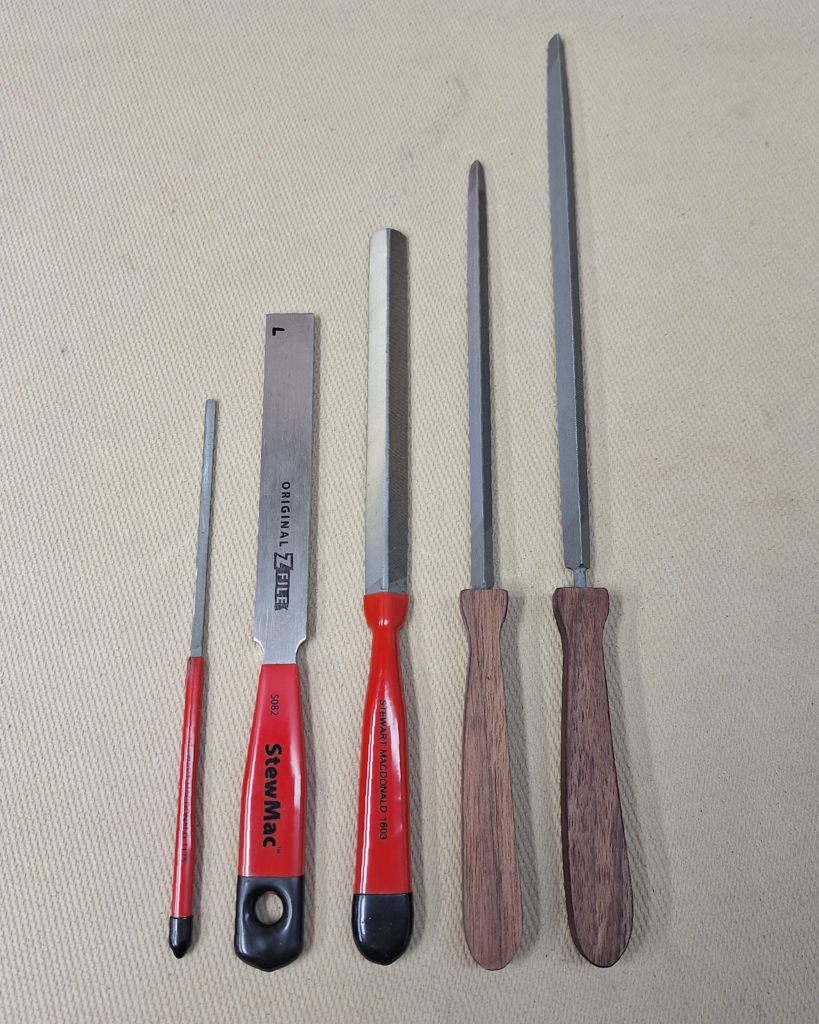
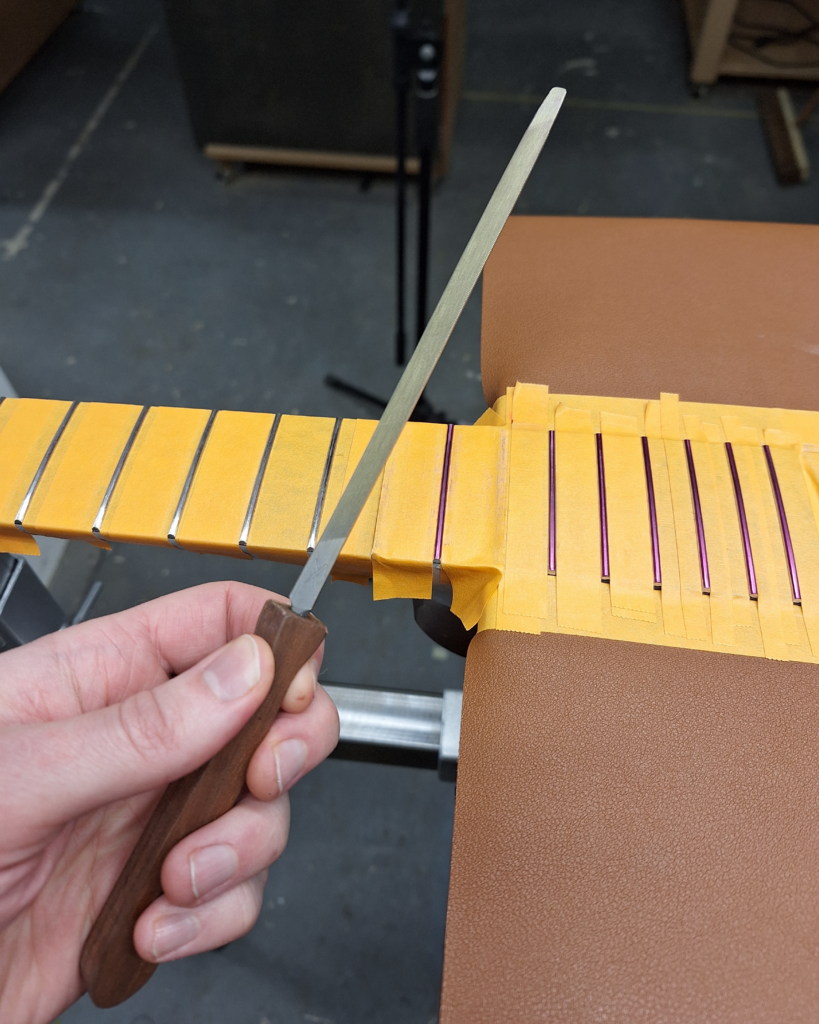
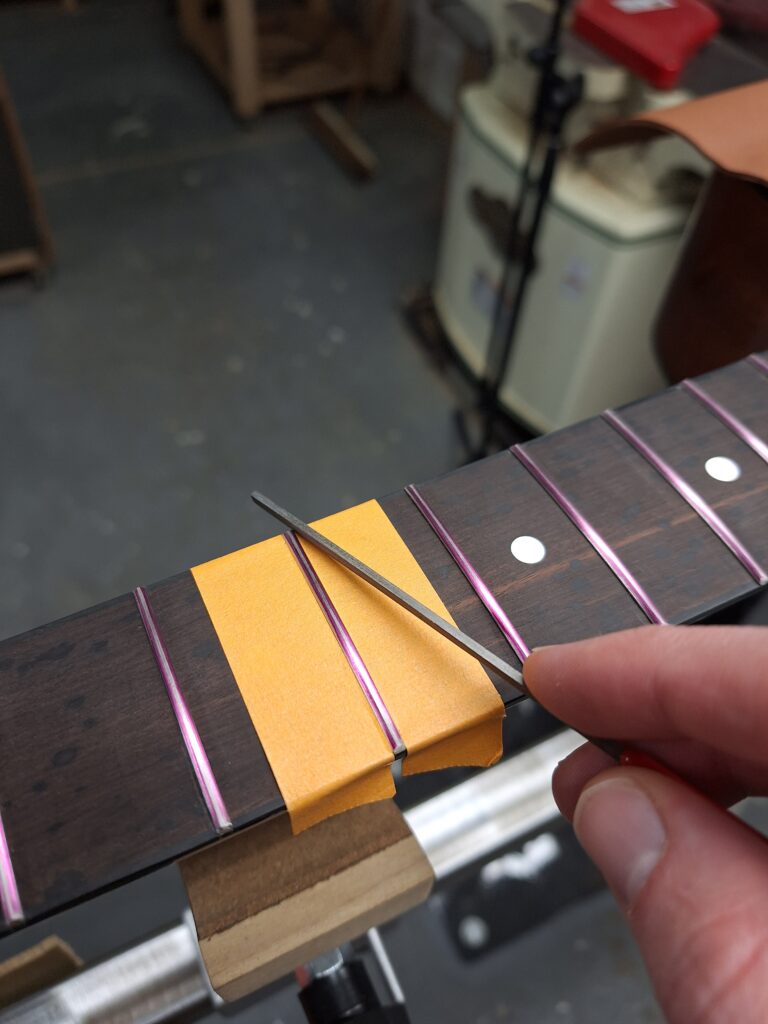
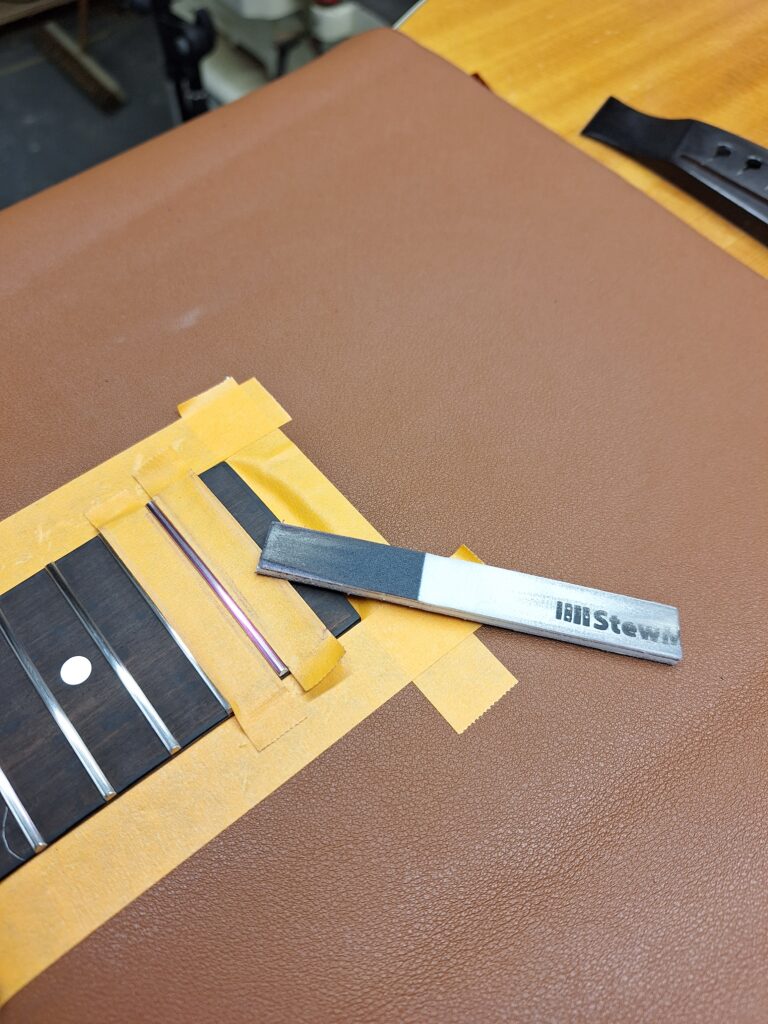
Once the frets are leveled, I begin the process of crowning the frets. I’ve tried out a few different tools recently which have assisted me in this effort. For quite some time I’ve been a fan of the large 3-Corner Fret Dressing File from StewMac, but recently I’ve tried out the Nicholson #21873NN 6″ American pattern extra slim taper file and I’ve been using it as my main crowning file. I also picked up a Grobet #32.454 8″ Double Extra Slim Taper 3 corner file and have found it useful for dealing with frets past the body joint. I made walnut handles for both of these. Beyond this, I use the StewMac fret end dressing file which I’ve had forever, and I also use a StewMac Z-File which I’ve found cleans up the chatter from the 3-corner files and makes the landing on the top of the frets very narrow.
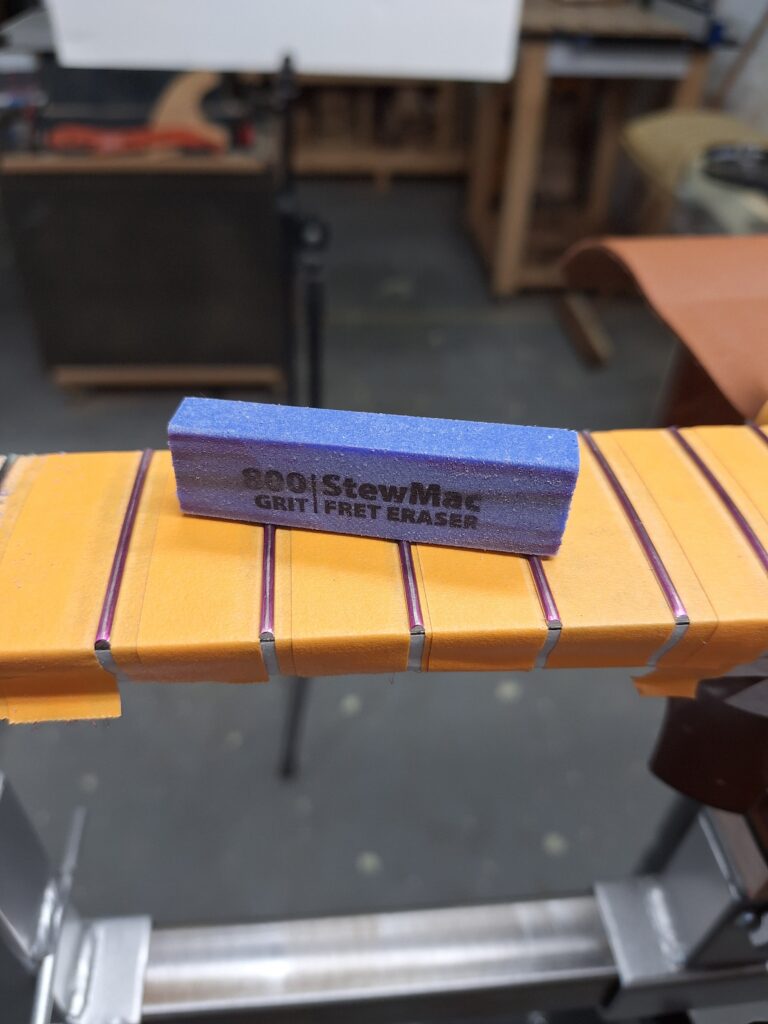
Once I have the frets crowned how I want them, I’ll go back and forth between sanding the fret tops, and the sides of the frets. I’ll use my aluminum sanding beams for the tops, and I’ve been enjoying the StewMac Fret Erasers for the sides. I’ll go through the grits up to 1000, and then finish sand the bevels and dress the fret ends. Afterwards, I’ll use a Micro-Mesh touch up stick from StewMac, and polish the frets using all three grits. Then I’ll buff the frets with a Dremel and some finishing compound.
Conclusion – I hope you found this insightful, if you have any questions or comments, feel free to message me through the Contact page and I’ll get back to you. Thank you!
-David
Overview – Back in July of 2020, I was beginning to put together what would eventually become the Winter Storm guitar pedal. At the same time, I was expanding my knowledge of guitar pedal circuits and beginning to build pedals regularly, some of which were clones of common guitar effects. I’ve always been interested in octave…
Overview – In Part 1 of the Gibson Les Paul Fretwork blog, I discussed what causes fret buzz and how to prepare a guitar for fret levelling. In Part 2, I will be discussing levelling, crowning, dressing, and polishing the frets so let’s get into it. Fretwork – I use my aluminum sanding beams and a combination of tools including…
Back in December 2022, I picked up a used DOD Death Metal and Digitech Grunge for $50—both not working properly. The Death Metal was stuck on, and the Grunge wouldn’t power up at all. From experience, I suspected the cheap footswitches were the issue. After cleaning off the nicotine smell, I replaced the switches and…
Overview – I’m back again with another circuit analysis, this time for the Ibanez Tubescreamer. If you’ve checked out my previous blog post, I did a circuit analysis of the Boss HM-2 Heavy Metal guitar pedal and felt like taking a look at something more common. There are boutique overdrives on the new and used market…
Overview – I recently finished up with this Zager ZAD80CE OM acoustic guitar repair that was particularly tricky. It took just about all of my skills as a luthier to get this back to where it should be, and I’m pleased with how it turned out. This was my first time doing an acoustic guitar bridge reglue…
Overview – In this blog post I’m going to teach you how to use a multimeter to measure the DC resistance of a guitar pickup. I have a couple of different examples that I’m going to show you, and I’ve found that this is a skill that I use regularly as part of my guitar…